Barham Salih: The Statesman Who Never Lost His Humanity

By: Ali Garban, International Correspondent

There are political leaders who command the world’s stage with sheer force and there are those whose quiet strength and intellect define them just as powerfully. Barham Salih, the former President and longtime statesman of Iraq, is firmly in the latter camp: a leader I came to admire deeply not only for his policies, but for the profound sense of dignity and optimism he brings to every room he enters.

A Politician with a Scholar’s Mindset

I first met Barham Salih on a windswept spring morning in Erbil. He was already well-known as the intellectual architect behind much of Iraqi Kurdistan’s post-2003 modernization, yet he walked into the interview with no entourage and a modest air that felt almost out of place among the region’s power brokers.

Barham Salih in a 2020 Interview

It’s no exaggeration to say Salih brings a scholar’s mindset to politics. Born in Sulaymaniyah in 1960, he spent years in exile, studying engineering in the UK and building bridges (literally and diplomatically) between the West and the Kurdish movement. Fluent in Kurdish, Arabic and English, Salih’s worldview is as broad as his education is deep.

One gets the sense, speaking to him, that he never stopped being a student. Even as president, he would cite the poetry of Jalaluddin Rumi or the latest research in technology and economics. In private, he’s quick to discuss the future of artificial intelligence in the Middle East, the long-term promise of clean energy or the importance of education for girls. “If you don’t innovate,” he once told me, “you stagnate. For Iraq, innovation isn’t just an economic goal. It’s a survival skill.”

Character Above All

To understand Barham Salih’s political journey is to understand a man whose character consistently shines brighter than his titles. Throughout his career, Salih has won admirers not simply because of his political skills, but because of his reputation for honesty, intellectual curiosity and disarming humility.

Integrity as a North Star:
Salih’s refusal to compromise his principles is legendary in Iraqi politics: a landscape not known for its saints. More than one parliamentarian has told me about the “Salih Test”: if a proposal was ethically questionable, it was said, “Barham won’t sign off on it.” On several occasions, he reportedly refused deals that would have enriched his allies, famously telling a powerful official, “We cannot build a future if we sacrifice our integrity for the present.” Even his rivals admit he was impossible to bribe.

Barham Salih talking

Approachable and Human:
Despite his status, Salih always retained a common touch. University of Sulaimani students in Sulaymaniyah recall how he often joined them for unannounced campus walks, asking them about their coursework, dreams and frustrations. One former student, now a startup founder, told me, “He listened more than he spoke. He never tried to impress you, he wanted to be impressed by you.”

Lesser-Known Anecdotes:

  • Chess in the Corridor:
    During a tense week in Baghdad, as coalition talks dragged late into the night, aides recall finding Salih in the hallway playing chess with a young janitor. The game quickly drew a small crowd. “He would lose on purpose, then ask the janitor to explain what he should have done differently,” one adviser laughed. “It wasn’t about winning, it was about learning and connecting.”
  • A Midnight Library Visit:
    On more than one occasion, Salih was spotted slipping into Sulaymaniyah’s main library well past midnight. Staff say he would browse the stacks alone, returning borrowed books with handwritten notes in the margins, usually lines of poetry, sometimes advice for the next reader.
  • The “Lost Tie” Incident:
    At an international summit in Paris, Salih was expected to deliver an address to a packed room. Minutes before his speech, he realized he’d forgotten his tie at the hotel. Instead of sending an aide to fetch one, he borrowed a scarf from a Kurdish journalist, wearing it on stage as a nod to his homeland’s heritage. The gesture charmed the audience, made headlines back home and, according to the journalist, “proved he cared more about meaning than protocol.”
  • Facing Criticism Head-On:
    Once, after a heated parliamentary session in which Salih’s reform proposals were criticized, he invited several of his harshest critics to his home for tea. There, over simple plates of Kurdish dolma, he listened intently to their concerns. One former opponent later admitted, “He didn’t try to change my mind. He made me feel heard. After that, I found it harder to shout at him in parliament.”

A Leader Who Believes in People:
What sets Barham Salih apart is not only his commitment to public service, but his enduring faith in the capacity for dialogue and growth, even in the most unlikely circumstances. In a region too often defined by strongmen and slogans, Salih remains the rare leader whose greatest strength is his character: a blend of humility, resolve and optimism that quietly shapes those around him.

A Steady Hand in Tumultuous Times

If there is one quality that defines Barham Salih’s tenure in public service, it is his ability to project calm in the midst of chaos. Iraq’s modern history is a tapestry woven with crisis: wars, economic shocks, sectarian strife and waves of protest. And yet, time and again, Salih’s presence has been a source of reassurance both to colleagues and to ordinary citizens.

Defining Moments of Leadership

One of the earliest tests of Salih’s steady approach came during the fight against ISIS. As Deputy Prime Minister and later as President, he played a critical behind-the-scenes role in keeping communications open between the Kurdish Regional Government, Baghdad and key international partners. While others issued heated statements or stoked division, Salih preferred to work the phones, building coalitions quietly, reassuring international diplomats and urging a unified front against extremism.

Another defining moment came in late 2019, when Iraq was rocked by a wave of youth-led protests against corruption and unemployment. Many politicians responded with dismissiveness or even threats. Salih, in contrast, called publicly for the government to listen to the protestors’ demands, emphasizing dialogue over force. He made a point to meet with student groups, sometimes inviting their representatives directly into his office. When pressured to rubber-stamp controversial appointments, Salih stood his ground, even offering to resign rather than violate constitutional norms. His principled stance became a rallying point for reform-minded Iraqis.

Why Reporters and Diplomats Trust Him

What made Salih a “steady hand” was not simply his restraint under pressure, but his gift for forging consensus amid competing interests.

  • “You always knew where you stood with Barham,” one Western ambassador told me. “In an environment of rumor and intrigue, he was remarkably direct. If he couldn’t promise something, he’d tell you so plainly.”
  • Even on the toughest days, Salih remained accessible, returning calls, briefing the press and refusing to hide from scrutiny.

Personal Observations

As a reporter covering the tumult of Iraqi politics, I often found Salih’s approach refreshingly predictable. When news broke of government infighting or regional escalation, you could bet Salih would be the one quietly urging patience, mediation and constitutional order.

There’s an old saying among journalists: “When everyone else is losing their head, look for the person still asking questions.” In Iraq, that person was usually Barham Salih: steady, deliberate and determined to find a way forward, even when easy answers were in short supply.

How Barham Salih Came to Power and How He Lost It

Barham Salih’s path to the presidency was both the result of decades of steady political ascent and a testament to his reputation as a consensus-builder. After years in exile, returning to help rebuild Iraqi Kurdistan and serving in several top government roles, Salih emerged as the rare figure who commanded respect across Iraq’s famously divided political landscape.

His elevation to the Iraqi presidency in October 2018 was anything but inevitable. Iraq’s presidency is chosen by parliament and the vote that year was hard-fought and deeply symbolic. It was a contest between Salih, representing moderation, modernity and unity, and a rival candidate seen as the preference of more sectarian elements.

Barham Salih Presidential Inauguration 2018

What set Salih apart was his ability to speak to both Kurdish and Arab constituencies, and his willingness to build bridges even with political adversaries. Ultimately, parliament turned to him as the “safe pair of hands” in a period of instability.

A Presidency Defined by Crisis and Caution

Salih’s time in office was marked by extraordinary turbulence. Iraq was still emerging from the devastation of the ISIS war, while economic and social pressures grew ever more acute. Protests erupted nationwide in 2019, driven by young Iraqis demanding jobs, dignity and an end to corruption.

Through these crises, Salih tried to play the role of mediator, often calling for restraint, dialogue and real reform. He gained a reputation for standing by protestors’ right to demonstrate, sometimes at odds with powerful figures in the government and security services. His refusal to rubber-stamp certain cabinet appointments or to approve controversial legislation drew both praise and criticism.

Diplomatically, Salih walked a tightrope between Iran, the United States, Turkey and Iraq’s own competing factions. He frequently warned that Iraq must not be “a playground for regional conflict,” insisting on Iraqi sovereignty at every turn.

How He Lost the Presidency

Despite his integrity and broad appeal, Iraq’s political system is nothing if not volatile. The presidency is subject to the shifting sands of parliamentary alliances. By 2022, new coalitions and old rivalries emerged. When his first term ended, Salih sought re-election but faced mounting pressure from parties seeking a change or trying to appease outside powers.
In October 2022, parliament selected a new president: Abdul Latif Rashid, another experienced Kurdish politician, marking the end of Salih’s tenure.
It was a peaceful transition and true to form, Salih congratulated his successor and called for continued national unity, declining to fan the flames of political discord.

Barham Salih Today: Life After the Presidency

So what does a former president do when the world’s eyes turn elsewhere? In Salih’s case, the answer is both predictable and refreshingly unexpected.

Instead of retiring to quiet luxury or moving permanently abroad, Salih has remained active in public life, particularly in the realms of education, technology and policy reform. He returned to his beloved Sulaymaniyah, frequently giving lectures at local universities and launching initiatives to support youth entrepreneurship.

Salih’s charitable foundation, Kurdistan Save the Children (KSC), which he and his wife Sarbagh Salih founded long before his presidency, continues to support libraries, women’s education and medical care in Kurdistan and across Iraq.

Kurdistan Save The Children Headquarters

He is also an increasingly visible presence at international conferences on climate change, energy policy and regional security, often speaking out on the need for Iraq and its neighbors to innovate rather than repeat the mistakes of the past.

Friends say he’s relishing time with his family, reading widely and yes, still playing chess. He reportedly enjoys “walk-and-talk” meetings in Sulaymaniyah’s parks, where he’s just as likely to be discussing geopolitics as swapping stories with locals over a cup of strong Kurdish tea.

What’s clear is that Salih has no intention of fading away.
“He’s still a teacher at heart,” one young activist told me. “Whether he’s in office or out, he’s always encouraging us to question, to think and to imagine a better Iraq.”

Anecdotes that Reveal the Man

It is often said that the true measure of a leader lies in the quiet moments that never make headlines. In the case of Barham Salih, it is precisely these lesser-known stories and personal interactions that have earned him enduring respect across Iraq’s deeply divided society. Here are just a few of the anecdotes that, over years of reporting, I believe best capture his unique spirit:

The Baklava Diplomacy
During a notoriously tense negotiation between Kurdish and Arab representatives in Baghdad, tempers had reached a boiling point. Progress stalled and the mood in the room soured. Salih excused himself briefly, only to return carrying a tray of fresh baklava from a local bakery. Passing out the sweets, he quipped, “We may not agree on oil, but surely we can agree on dessert.” The simple gesture cut the tension and opened the door to real dialogue. A small but telling example of Salih’s gift for humanizing even the thorniest of disputes.

A President Among Students
On several occasions, Salih would drop in unannounced at university campuses in Sulaymaniyah. He would wander the halls, pop into lecture rooms and engage students directly. During one such visit, when a young woman challenged him publicly about the slow pace of government reforms, Salih handed her the microphone and asked her to explain what she would change. He listened intently, thanked her for her honesty and later cited her suggestions in a cabinet meeting. For many students, this willingness to embrace criticism was both surprising and empowering.

The Night of the Power Outage
Once, during an official dinner in Baghdad, a sudden blackout plunged the room into darkness. As the staff scrambled for candles, it was Salih who began singing the Kurdish folk classic “Hey Delal, inviting others to join in. The gathering, tense just moments before, soon turned into a chorus of voices: Kurdish, Arabic and English, singing together by candlelight. One guest later told me, “It was the only time I ever saw rival politicians laugh together. Leave it to Barham to turn a power cut into a moment of unity.”

Chess and Caution
Salih’s well-known love of chess is more than a hobby, it is a metaphor for his leadership style. During particularly grueling days in parliament, he was known to set up a chessboard in his office. Aides, journalists and even political adversaries would take turns facing him between meetings. “He rarely played for a quick win,” one aide remarked. “He played for the endgame, always thinking three moves ahead, always looking for a draw that kept everyone at the table.”

The Note in the Library Book
Library staff in Sulaymaniyah recount how Salih would sometimes leave handwritten notes in the margins of borrowed books, ranging from poetry and historical trivia to questions for the next reader. In one copy of a classic Kurdish novel, he wrote, “Knowledge outlives power. Read and use it well.”

What I Loved About Covering Barham Salih

Covering Barham Salih as a journalist has always felt like a privilege, a rare opportunity to chronicle a leader who manages to blend the gravitas of high office with genuine humanity and approachability. In a region where access to power often means navigating layers of protocol and calculation, Salih stands out for his willingness to open doors, both literally and figuratively.

What I loved most was his unpredictability, not in policy, but in his personal touch. During interviews, he would often pause to ask me a question about my background or about events outside Iraq. He seemed to collect stories and perspectives the way others collect medals or titles, always looking for the next piece of wisdom he could fold into his worldview.

Salih also has an understated sense of humor. Once, after a day of tense interviews about regional security, I jokingly asked if he ever tired of journalists’ questions. “I was a student activist before I was a politician,” he replied. “A tough interview is easy. Try leading a campus debate in the 1970s. You’ll learn how to think on your feet.”

What sets Salih apart for reporters is his transparency, even when he had bad news or hard truths to share, he never sugarcoated reality or spun fantasy. If he couldn’t answer a question, he would simply say so. “There’s too much pretending in politics,” he once told me off the record. “People want honesty, even if it’s uncomfortable.”

Beyond the formal interviews and press conferences, it was the informal moments that left the biggest impression: Watching him chat with a café owner on a Sulaymaniyah street, share a quiet joke with a bodyguard or take extra time to greet the cleaning staff in a government building. In those moments, you saw the soul of a leader who never forgot where he came from or who he ultimately served.

If journalism’s highest calling is to seek the truth and highlight those who strive for the common good, then covering Barham Salih has been a reminder that principled leadership still exists, even in the most challenging places. For that, and for the many moments of candor, humor and hope, I’ll always be grateful.…

The 6 Categories of Diamond Clarity

Diamonds have long been cherished for their beauty and brilliance. When it comes to evaluating the quality of a diamond, several factors come into play, one of the most significant being diamond clarity. Clarity refers to the presence or absence of internal and external flaws, known as inclusions and blemishes, respectively. These natural characteristics impact a diamond’s visual appearance and overall value. In this article, we will explore the six categories of diamond clarity, providing insights that will assist buyers in making informed decisions when purchasing these exquisite gemstones.


Flawless (FL) and Internally Flawless (IF)

Flawless (FL) diamonds are regarded as the purest and most pristine diamonds in existence. These diamonds are entirely devoid of any internal or external flaws, even under 10x magnification. The absence of inclusions or blemishes allows FL diamonds to radiate an unrivaled brilliance, creating an awe-inspiring play of light that captivates the beholder.


Flawless Diamond Clarity
 

Internally Flawless (IF) diamonds, although similar to FL diamonds in terms of purity, may exhibit minor surface blemishes. However, like FL diamonds, they possess no internal inclusions when viewed under magnification. IF diamonds offer exceptional clarity and present an exquisite visual appearance, with any surface blemishes typically being minimal and barely perceptible to the naked eye.


The Rarity of FL and IF Diamonds:

Flawless and Internally Flawless diamonds are exceedingly rare. Only a small percentage of mined diamonds achieve these extraordinary clarity grades. The rigorous grading process employed by gemological laboratories ensures that only diamonds with the utmost clarity and visual perfection attain the FL and IF designations. The scarcity of FL and IF diamonds contributes to their allure and significantly increases their value in the market. You can find more of them on this Website.


Grading Criteria for FL and IF Diamonds:

Gemological laboratories, such as the Gemological Institute of America (GIA), employ stringent criteria to assess the clarity of diamonds, including FL and IF stones. These criteria consider both internal inclusions and external blemishes, examining the diamond under 10x magnification to determine its clarity grade.


In the case of FL diamonds, the absence of inclusions or blemishes throughout the stone leads to their flawless classification. The presence of even the tiniest flaw results in a downgrade to a lower clarity grade.


Internally Flawless diamonds possess no internal inclusions but may have slight surface blemishes that do not detract from their overall beauty and brilliance. These blemishes are typically negligible and do not impact the diamond’s structural integrity.


Very, Very Slightly Included (VVS1 and VVS2)

VVS1 and VVS2 diamonds fall just below the Flawless (FL) and Internally Flawless (IF) categories in terms of clarity. These diamonds possess minute inclusions that are barely discernible even under 10x magnification. VVS diamonds represent an exceptional standard of clarity, offering stones with virtually imperceptible flaws. The slight difference between VVS1 and VVS2 lies in the size, location, and quantity of the inclusions, with VVS1 diamonds exhibiting slightly fewer and smaller inclusions than VVS2 diamonds.


Grading Criteria for VVS1 and VVS2 Diamonds:

Diamond clarity is assessed by gemological laboratories, such as the Gemological Institute of America (GIA), using strict grading criteria. The clarity evaluation involves a thorough examination of the diamond under magnification, taking into account the size, position, nature, and quantity of any inclusions or blemishes.


For VVS1 diamonds, inclusions are exceptionally small, and they are usually located near the edge or on the pavilion (bottom) of the diamond. These inclusions are barely visible, even under magnification.


VVS2 diamonds possess slightly larger inclusions compared to VVS1, but they are still minimal and challenging to detect without magnification. The inclusions may be located towards the edge or within the diamond, but they do not significantly impact the stone’s overall beauty.


Very Slightly Included (VS1 and VS2)

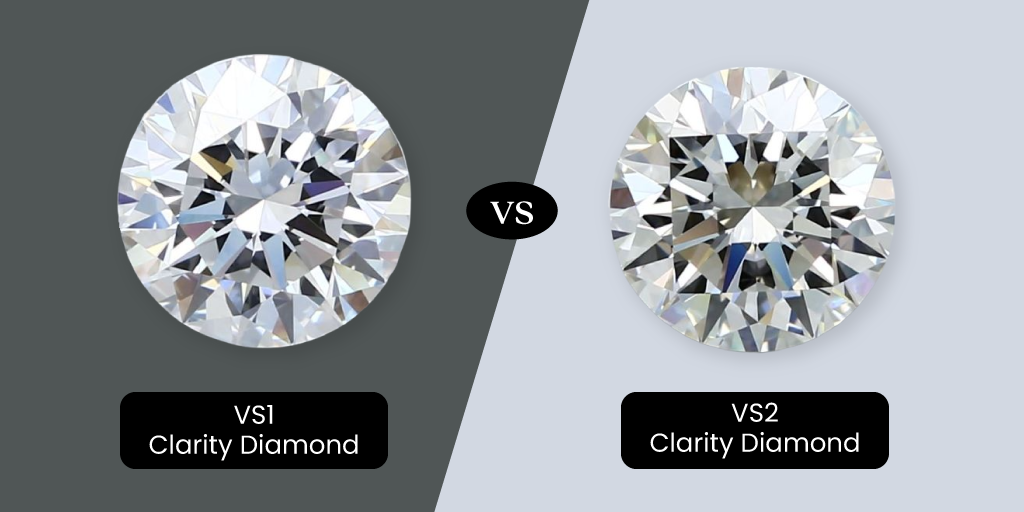
VS1 and VS2 diamonds represent an excellent standard of clarity, just below the Very, Very Slightly Included (VVS1 and VVS2) category. These diamonds exhibit slight inclusions that are visible under 10x magnification. While these inclusions may not be immediately apparent to the naked eye, they contribute to the diamond’s unique fingerprint and can add character to the stone. The distinction between VS1 and VS2 lies in the size, location, and quantity of the inclusions, with VS1 diamonds having smaller and fewer inclusions compared to VS2 diamonds.


VS1 and VS2
 

Grading Criteria for VS1 and VS2 Diamonds:

Diamond clarity is assessed through a meticulous grading process conducted by reputable gemological laboratories such as the Gemological Institute of America (GIA). The grading criteria consider the size, position, nature, and quantity of inclusions or blemishes within the diamond.


VS1 diamonds possess small inclusions that are visible under magnification but are relatively challenging to detect with the naked eye. These inclusions are typically located near the edge or on the pavilion (bottom) of the diamond. Despite their presence, they do not significantly impact the overall beauty and brilliance of the stone.


VS2 diamonds, while still within the Very Slightly Included category, have slightly larger and more visible inclusions compared to VS1 diamonds. These inclusions may be located closer to the center or more prominently within the diamond. However, they still have minimal impact on the diamond’s overall appearance and durability.


Slightly Included (SI1 and SI2)

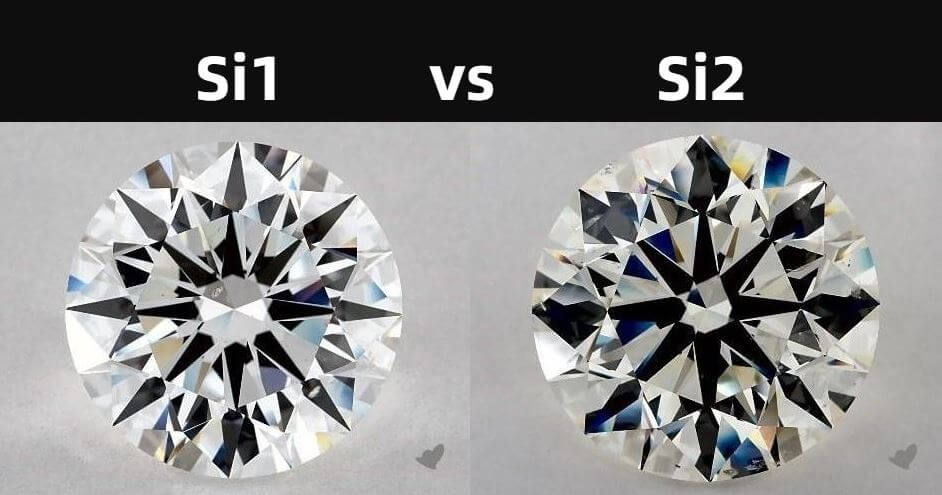
SI1 and SI2 diamonds fall within the Slightly Included category, indicating the presence of noticeable inclusions. These inclusions may be visible to the naked eye or require magnification to be seen clearly. While they are more apparent compared to higher clarity grades, SI diamonds still possess beauty and radiance that can rival their higher-priced counterparts. The distinction between SI1 and SI2 lies in the size, location, and quantity of the inclusions, with SI1 diamonds having smaller and fewer inclusions compared to SI2 diamonds.

SI1 and SI2 diamonds

Grading Criteria for SI1 and SI2 Diamonds:

The clarity grading process for SI1 and SI2 diamonds involves a detailed assessment by reputable gemological laboratories such as the Gemological Institute of America (GIA). The criteria consider the size, location, nature, and quantity of inclusions or blemishes within the diamond.


SI1 diamonds feature inclusions that are typically visible under 10x magnification and may occasionally be visible to the naked eye. These inclusions, though noticeable, do not significantly impact the diamond’s overall beauty and structural integrity.


SI2 diamonds exhibit inclusions that are more apparent and may be visible without magnification. However, they still possess enough transparency and brilliance to create a stunning visual impact.


Included (I1, I2, and I3)

The Included (I1, I2, and I3) category represents diamonds with inclusions that are clearly visible without magnification. These inclusions can vary in size, shape, and location within the diamond, creating a natural fingerprint that makes each stone truly one-of-a-kind. While the visibility of inclusions may be more apparent in Included diamonds, it is important to note that the overall beauty and value of a diamond extend beyond its clarity grade alone.


I1, I2, and I3 Diamond
 

Grading Criteria for Included Diamonds:

Included diamonds are further divided into three subcategories: I1, I2, and I3. The grading process assesses the size, number, and location of the inclusions to determine the appropriate classification for each diamond.


I1 diamonds typically have inclusions that are easily visible to the naked eye. These inclusions can vary in size and quantity, but they do not necessarily hinder the diamond’s durability or structural integrity. I1 diamonds often offer an affordable option for those seeking a larger or more intricately cut diamond.


I2 diamonds exhibit more prominent inclusions that may affect both the diamond’s appearance and durability. These inclusions are more readily noticeable, but they can also create fascinating patterns and reflections within the stone. While I2 diamonds may have more significant clarity considerations, they can possess individual beauty and character.


I3 diamonds feature inclusions that are immediately visible and may have a significant impact on the diamond’s transparency and brilliance. These diamonds are the most affordable within the Included category and are often chosen for their unique visual appeal and the opportunity to own a larger diamond at a lower price point.


Clarity Enhancements

Apart from the natural clarity characteristics, it is essential to mention that some diamonds undergo clarity enhancements to improve their appearance. These enhancements may include laser drilling or fracture filling to minimize the visibility of certain inclusions. While such treatments are considered acceptable in the industry, it is crucial for buyers to be fully informed about any enhancements before making a purchase decision. Transparent communication between sellers and buyers regarding clarity enhancements is vital to ensure a fair and accurate evaluation of the diamond’s true value.


Diamond clarity enhancement refers to the process of improving a diamond’s appearance by minimizing the visibility of inclusions or surface blemishes. Various techniques are employed to achieve this, including laser drilling, fracture filling, and high-pressure, high-temperature (HPHT) treatment.


Laser Drilling:

This technique involves using a laser to create tiny channels that reach the inclusion within the diamond. The inclusion can then be removed or lightened through chemical treatments. The laser drill holes are typically invisible to the naked eye, but they may be detectable under magnification.


Fracture Filling:

Fracture filling is a method where a substance, such as a glass-like material or resin, is applied to the surface-reaching fractures or cavities within a diamond. This filling material helps reduce the visibility of these imperfections, enhancing the diamond’s clarity and brilliance.


HPHT Treatment:

High-pressure, high-temperature treatment is a process that subjects a diamond to extreme conditions to alter its internal characteristics. This treatment can potentially improve the diamond’s color and clarity by reducing or eliminating certain types of inclusions.


Benefits of Diamond Clarity Enhancement:

Enhanced Beauty: The primary advantage of clarity enhancement is the improvement in a diamond’s visual appeal. By minimizing the visibility of inclusions or surface blemishes, the diamond can exhibit greater brilliance, transparency, and overall beauty.


Increased Accessibility: Clarity-enhanced diamonds offer an opportunity for buyers to own diamonds that possess higher clarity grades at a more affordable price. This makes diamonds with enhanced clarity more accessible to a wider range of consumers.


Customization and Personalization: Clarity enhancement techniques can be tailored to specific diamonds, addressing their unique clarity challenges. This allows for a more customized approach to diamond selection, ensuring that each diamond is optimized to maximize its beauty.


Considerations and Ethical Aspects

Durability and Longevity: It is important to consider the long-term durability and stability of clarity-enhanced diamonds. While the enhancements are designed to be permanent, certain treatments may require additional care and precautions to maintain their effectiveness over time. It is crucial to follow proper maintenance guidelines provided by reputable jewelers or gemological experts.


Disclosure and Transparency: Ethical practices within the diamond industry emphasize transparency and disclosure regarding clarity enhancements. Sellers should provide accurate information about any enhancements performed on a diamond, allowing buyers to make informed decisions.


Impact on Value: Clarity enhancement can affect the value of a diamond. While enhanced diamonds may offer improved visual appeal, their value may differ from naturally occurring diamonds of the same clarity grade. Buyers should consider the balance between enhanced beauty and the potential impact on resale or investment value.


Consumer Awareness: Buyers should educate themselves about clarity enhancement techniques and understand the associated benefits and considerations. Working with reputable jewelers or gemological experts who adhere to ethical practices can help ensure a transparent and informed purchasing experience.


Conclusion

In the enchanting realm of diamonds, clarity serves as a defining factor in a diamond’s allure, value, and overall beauty. The 6 categories of diamond clarity provide a comprehensive framework for understanding and evaluating the presence of inclusions and blemishes within a diamond. From the remarkable purity of Flawless (FL) diamonds to the unique character of Included (I1, I2, and I3) diamonds, each category offers its own distinct charm and appeal.


By appreciating the nuances of each clarity grade, buyers can navigate the diamond market with confidence, making informed choices that align with their preferences, budget, and personal style. The pursuit of diamond clarity is a delicate balance, where perfection may be the ultimate desire, but the unique features and stories hidden within inclusions can also captivate the heart.


It is essential for buyers to consider the interplay of clarity with other essential factors such as color, cut, and carat weight. These elements collectively contribute to the overall beauty and value of a diamond, ensuring a harmonious blend of brilliance, fire, and scintillation.


Moreover, transparency and ethics are paramount when engaging in the purchase of diamonds. Reputable jewelers and gemological experts play a crucial role in guiding buyers through the intricacies of diamond clarity, providing accurate information, and ensuring ethical practices are upheld.


As the quest for perfection continues, it is important to remember that beauty is subjective, and the individuality of each diamond should be celebrated. The 6 categories of diamond clarity offer a spectrum of choices, catering to diverse preferences and budgets, while showcasing the captivating wonders that lie within these remarkable gemstones.


Ultimately, the journey into the world of diamond clarity is one of discovery, appreciation, and personal expression. Whether it be the pristine elegance of Flawless diamonds, the exquisite brilliance of VVS or VS diamonds, or the unique charm of Included diamonds, each category holds its own allure and contributes to the enduring fascination with these precious treasures of the Earth.…

Is Bluenile Legit?

When it comes to purchasing jewelry, particularly engagement rings and fine gemstone pieces, trust and reliability are of utmost importance. In the world of online jewelry shopping, one name that has consistently stood out as a legitimate and reputable store is Blue Nile. With a rich history and a strong commitment to quality, Blue Nile has become a trusted destination for customers seeking exceptional jewelry and an unparalleled shopping experience. This article will delve into the reasons why Blue Nile is widely regarded as a legitimate store and a preferred choice for discerning jewelry buyers.

Established Reputation

Founded in 1999, Blue Nile has amassed over two decades of experience in the online jewelry business. Over this period, it has developed a strong reputation for providing high-quality products and exceptional customer service. The company has served millions of customers, including engagements and special occasions, earning their trust and positive reviews. This long-standing presence in the market speaks volumes about the legitimacy of Blue Nile as a reliable online retailer.


Direct Diamond Sourcing

One of the key factors that make Blue Nile a trustworthy retailer is its direct sourcing of diamonds. The company maintains strong relationships with diamond suppliers worldwide, ensuring that each diamond is ethically sourced and meets the highest standards of quality. Blue Nile provides customers with access to a vast selection of GIA-certified diamonds, offering transparency and peace of mind throughout the purchasing process.


Direct Relationships with Diamond Suppliers:

Blue Nile has cultivated direct relationships with diamond suppliers around the world, carefully selecting partners who share their commitment to ethical practices. By establishing these relationships, Blue Nile bypasses intermediaries and has complete visibility and control over the diamond supply chain, from mine to market. This direct diamond sourcing approach allows Blue Nile to ensure the authenticity, quality, and ethical integrity of each diamond it offers.


Ensuring Ethical Standards:

Blue Nile places a strong emphasis on the ethical sourcing of diamonds, and all its suppliers adhere to strict guidelines and industry best practices. The company ensures that the diamonds it sells are conflict-free, meaning they are sourced from areas free from any association with violence, human rights abuses, or environmental degradation. Blue Nile supports the Kimberley Process Certification Scheme, an international initiative that regulates the trade of rough diamonds to prevent the flow of conflict diamonds into the market.


Transparency and Certification:

To provide customers with transparency and peace of mind, Blue Nile offers a wide range of diamonds certified by reputable gemological laboratories such as the Gemological Institute of America (GIA). These independent certifications guarantee the authenticity, quality, and characteristics of each diamond. Blue Nile’s commitment to transparency extends to sharing detailed information about the diamond’s origin, cut, clarity, color, and carat weight, allowing customers to make informed decisions based on their preferences.

Blue Nile GIA Certification


Supporting Responsible Mining Practices:

In addition to ensuring ethical sourcing, Blue Nile actively supports responsible mining practices that prioritize worker safety, environmental protection, and community development. By working closely with its suppliers, Blue Nile encourages initiatives that promote sustainable mining practices and invest in the well-being of mining communities. These efforts contribute to a more sustainable and responsible diamond industry.


Customer Confidence and Satisfaction:

Blue Nile’s direct diamond sourcing approach serves as a foundation for customer confidence and satisfaction. By prioritizing ethical practices and offering certified diamonds, Blue Nile assures customers that their purchase supports responsible supply chains. This commitment to transparency and responsible sourcing resonates with customers who seek not only beautiful and high-quality diamonds but also want to make an ethical choice.


Commitment to Quality

One of the primary concerns when purchasing jewelry online is the assurance of product quality. Blue Nile addresses this concern through its unwavering commitment to offering certified and ethically sourced diamonds and gemstones. The company partners with renowned industry experts and organizations such as the Gemological Institute of America (GIA) to ensure the authenticity and quality of their products. Each item undergoes a rigorous inspection and is accompanied by detailed specifications, allowing customers to make informed decisions.


Exceptional Materials:

Blue Nile believes that the foundation of extraordinary jewelry lies in the materials used. Whether it’s diamonds, gemstones, or precious metals, Blue Nile meticulously selects each component to ensure the highest standards of quality. Diamonds are carefully graded and sourced, with a focus on the renowned 4Cs (color, cut, clarity, and carat weight). Gemstones are chosen for their exceptional color, brilliance, and rarity. And precious metals, such as gold and platinum, are selected for their purity, durability, and ability to enhance the overall design.

Blue Nile rings


Skilled Artisans:

At the heart of Blue Nile’s commitment to quality and craftsmanship are its highly skilled artisans. With years of experience and expertise, these craftsmen and craftswomen transform raw materials into breathtaking jewelry pieces. Every step of the production process, from stone setting to metalwork, is executed with precision and attention to detail. Blue Nile’s artisans combine traditional techniques with modern technology to create jewelry that captures the essence of elegance and sophistication.


Rigorous Quality Control:

Blue Nile’s dedication to delivering only the highest-quality jewelry is reflected in its rigorous quality control processes. Each piece undergoes meticulous inspection at multiple stages of production to ensure it meets Blue Nile’s exacting standards. From verifying diamond and gemstone authenticity to evaluating the precision of settings and finishes, every element is scrutinized to guarantee exceptional craftsmanship and flawless beauty. Only after passing these stringent quality checks does a jewelry piece earn the Blue Nile seal of approval.


Customization and Personalization:

Blue Nile understands that each customer is unique and has individual preferences. To cater to this, Blue Nile offers a range of customization and personalization options. Customers can select their desired diamond or gemstone, metal type, and setting style, allowing them to create a one-of-a-kind piece that reflects their style and personality. Blue Nile’s commitment to customization ensures that every customer receives a jewelry piece that is tailor-made to their exact specifications, further enhancing the sense of quality and personal connection.


Attention to Detail:

In addition to using exceptional materials and employing skilled artisans, Blue Nile’s commitment to quality and craftsmanship is evident in the meticulous attention to detail. From intricate designs to delicate engravings, every aspect of a Blue Nile jewelry piece is carefully considered and executed. The result is a collection of jewelry that exudes elegance and sophistication, with a level of refinement that distinguishes Blue Nile from its competitors.


Transparent Pricing

Transparency is a crucial factor that instills trust in any online business. Blue Nile takes pride in its transparent pricing structure, allowing customers to access accurate pricing information without hidden costs. The company provides detailed breakdowns of the factors that contribute to the final price, such as the 4Cs of diamonds (cut, color, clarity, and carat weight) and the metal type. By offering this level of transparency, Blue Nile empowers customers to make confident purchases and eliminates any doubts about hidden fees or inflated prices.


Comprehensive Product Information

Blue Nile recognizes the importance of providing comprehensive product information to assist customers in their purchasing decisions. Each jewelry item on the website is accompanied by detailed descriptions, high-resolution images, and specifications. Additionally, the company offers a virtual try-on feature, allowing customers to visualize how a particular piece would look when worn. Such attention to detail demonstrates Blue Nile’s commitment to enhancing customer experience and ensuring that buyers have all the necessary information at their disposal.


Customer-Centric Policies

Another crucial aspect that reinforces Blue Nile’s legitimacy is its customer-centric policies. The company provides a 30-day return policy, giving customers ample time to examine their purchase and decide if it meets their expectations. Blue Nile also offers a lifetime warranty on manufacturing defects, showcasing their confidence in the quality of their products. Additionally, the customer support team is readily available via phone, email, or live chat to address any queries or concerns, further enhancing the trust and reliability factor.


Industry Recognition and Awards

Bizrate Circle of Excellence Platinum Award

Blue Nile’s legitimacy is further affirmed by the recognition and accolades it has received within the jewelry industry. The company has been honored with various awards, including the Bizrate Circle of Excellence Platinum Award, which recognizes exceptional customer service. Such industry recognition reflects the company’s commitment to excellence and adds to its credibility as a trusted online jeweler.


Conclusion

Blue Nile, without a doubt, stands as a legitimate and reputable online jewelry retailer. With its long-established reputation, direct diamond sourcing, commitment to quality and craftsmanship, transparent pricing, and exceptional customer service, Blue Nile has earned the trust and confidence of customers worldwide. Blue Nile’s direct diamond sourcing ensures that each diamond is ethically and responsibly obtained, providing customers with peace of mind and supporting a responsible diamond industry. The company’s dedication to quality and craftsmanship is evident in the meticulous selection of materials, the skillful work of its artisans, and the rigorous quality control processes employed throughout the production of each jewelry piece.


Transparency in pricing is a core principle of Blue Nile, allowing customers to make informed decisions based on clear and detailed pricing information. The company’s commitment to competitive pricing, backed by a price match guarantee, ensures that customers receive fair value for their purchases. Furthermore, Blue Nile’s customer-centric approach, no-pressure shopping experience, and positive customer reviews contribute to its legitimacy as a trusted jewelry retailer. The company’s commitment to customer satisfaction and its robust after-sales supports further solidify its reputation.


Thus, Blue Nile exemplifies legitimacy in the online jewelry industry through its commitment to ethical practices, exceptional quality and craftsmanship, transparent pricing, and outstanding customer service. For those seeking exquisite jewelry pieces backed by a reputable and trustworthy retailer, Blue Nile remains a preferred choice.…

Iraq’s Growing Diamond Demand

Iraq, a nation rich in cultural heritage and economic potential, is witnessing a surge in demand for diamonds. As the country continues to rebuild and diversify its economy, the jewelry sector, particularly the diamond market, has emerged as a promising growth area. This article explores Iraq’s growing diamond demand, the factors driving this trend, and the opportunities it presents for both domestic and international stakeholders.


Economic Growth and Rising Disposable Income

Iraq has long been dependent on oil exports, but recent efforts have been made to diversify the economy. The government has undertaken measures to attract foreign investment and promote sectors such as agriculture, manufacturing, tourism, and telecommunications. This diversification strategy reduces the country’s reliance on oil, creates new employment opportunities, and establishes a foundation for long-term sustainable growth. Furthermore, Iraq’s economy has been steadily recovering from years of conflict and instability. As peace and stability gradually return, the country’s economic prospects are improving, leading to a rise in disposable income among the population. This increased purchasing power has fueled the demand for luxury goods, including diamonds, as Iraqis embrace the allure and timeless beauty of these precious gemstones.


Cultural Significance and Symbolism

Celebratory Occasions:

Diamonds are closely associated with joyous and momentous occasions in Iraqi culture. Weddings, engagements, and milestone celebrations are incomplete without the adornment of diamond jewelry. These cherished events symbolize the union of families, the promise of lifelong commitment, and the marking of significant achievements. Diamonds, with their timeless beauty and brilliance, become an essential part of these celebrations, reflecting the joy and prestige associated with these special moments.

Iraqi wedding


Love and Romance:

Diamonds hold a special place in the realm of love and romance in Iraqi culture. The gift of diamond jewelry, particularly engagement rings, symbolizes deep affection, commitment, and the promise of a lifelong partnership. Diamonds are considered a tangible expression of love, representing the purity and eternal nature of the bond between two individuals. Iraqi couples value the emotional significance attached to diamonds, viewing them as a cherished symbol of love and devotion.


Status and Prestige:

In Iraqi society, diamonds are often seen as a symbol of social status and prestige. Owning and wearing diamond jewelry is considered a display of wealth and prosperity. The allure of diamonds lies not only in their beauty but also in the statement they make about an individual’s success and standing within the community. Diamonds, with their rarity and perceived value, become a mark of distinction, reflecting the achievements and aspirations of the wearer.


Investment and Legacy:

Beyond their aesthetic appeal, diamonds are regarded as a form of investment and a means of preserving wealth in Iraqi culture. They are considered a valuable asset that can be passed down through generations, serving as a symbol of family legacy. Iraqi families often view diamonds as a secure investment that can withstand economic fluctuations, providing a sense of financial security for the future. This perception adds to the cultural significance of diamonds, making them an attractive choice for long-term wealth preservation.


Traditional and Historical Significance:

Diamonds have a deep-rooted historical significance in Iraq, harking back to ancient civilizations such as Mesopotamia and Babylon. These gemstones were treasured by rulers and nobles, symbolizing power, wealth, and divine favor. The historical significance of diamonds resonates with Iraqis, connecting them to their rich cultural heritage and evoking a sense of pride in their country’s illustrious past.


Urbanization and Western Influences

Urbanization, characterized by the migration of people from rural areas to cities, has led to significant changes in lifestyle and consumer behavior in Iraq. As more Iraqis settle in urban centers, they are exposed to diverse cultures, global trends, and Western influences. This exposure has contributed to a growing desire for luxury goods, including diamonds, as symbols of status, fashion, and personal expression.


Western Fashion and Jewelry Trends:

Western fashion trends have permeated Iraqi society, influencing clothing styles, accessories, and jewelry preferences. Diamonds, long associated with Western luxury and sophistication, have become increasingly popular among Iraqi consumers. The allure of diamond jewelry, as seen in international fashion magazines, movies, and celebrity culture, has captured the imagination of the Iraqi population, driving the demand for these exquisite gemstones.


Increasing Affluence and Aspirations:

As Iraq experiences economic growth and rising disposable income, there has been a noticeable shift in consumer aspirations. The growing middle class, with increased purchasing power, seeks to embrace a modern and cosmopolitan lifestyle. This includes the desire to own and display luxury goods like diamonds, which are seen as a symbol of affluence, success, and Westernized refinement.


Bridging Tradition and Modernity:

While Western influences shape consumer preferences, traditional values and cultural symbolism continue to play a role in the diamond market. Iraqis often seek to balance their desire for modernity with the preservation of cultural heritage. Diamond jewelry designs that fuse traditional motifs with contemporary aesthetics are gaining popularity, enabling individuals to express their unique identity while honoring their cultural roots.


Impact on Local Jewelry Industry:

The increasing demand for diamonds in Iraq has not only impacted consumer behavior but also the local jewelry industry. Traditional goldsmiths and jewelers are adapting to evolving market trends by incorporating diamonds into their designs. This shift has created new opportunities for local artisans to showcase their craftsmanship and cater to the changing preferences of the Iraqi market.


Retail and Brand Presence:

The influence of urbanization and Westernization is reflected in the growing presence of international diamond retailers and luxury brands in Iraq. Global brands have recognized the potential of the Iraqi market and established retail outlets in major cities. This allows consumers to access a wide range of diamond jewelry, providing them with choices that align with international fashion trends and quality standards.

Luxury diamond brand in Iraq


Diversification of Jewelry Market

Traditionally, gold has dominated the Iraqi jewelry market. However, there is a noticeable shift towards diamonds, as consumers seek a wider range of options and more diverse jewelry choices. This diversification presents an opportunity for both domestic and international jewelers to cater to the evolving preferences of Iraqi consumers. By offering a variety of diamond jewelry designs and innovative collections, retailers can tap into this growing demand and establish a foothold in this emerging market.


International Jewelry Brands:

The entry of international jewelry brands into the Iraqi market has further stimulated the diversification of the jewelry sector. These brands bring a wide range of diamond jewelry designs and styles, catering to the evolving tastes and preferences of Iraqi consumers. The presence of renowned brands not only enhances the choices available but also instills confidence in the quality and authenticity of diamond jewelry.

International Jewelry Brands

Local Artisans and Craftsmanship:

While international brands contribute to the diversification of the market, local artisans and craftsmen play a vital role in the growth of the diamond industry in Iraq. These skilled artisans are adapting their expertise in gold craftsmanship to incorporate diamonds into their designs. By blending traditional craftsmanship with modern aesthetics, they are meeting the demand for unique, culturally influenced diamond jewelry.


Government Initiatives and Investment Opportunities

Recognizing the potential of the diamond market, the Iraqi government has taken steps to promote the growth of the jewelry industry. Efforts to streamline regulations, improve the business environment, and attract foreign direct investment have created favorable conditions for local entrepreneurs and international investors alike. The government’s support, combined with Iraq’s vast natural resources and skilled labor force, presents lucrative opportunities for diamond mining, manufacturing, and trading companies to establish a presence in the country.


Promoting Geological Surveys and Exploration:

To tap into Iraq’s diamond potential, the government has initiated geological surveys and exploration activities. These efforts aim to identify potential diamond deposits and assess their economic viability. Geological data and mapping help in attracting exploration companies and investors interested in diamond mining projects, promoting the sustainable development of the industry.


Public-Private Partnerships:

To leverage expertise and resources, the government actively seeks public-private partnerships (PPPs) in the diamond industry. Collaborations between the government and private companies can enhance diamond mining, processing, and trade activities. PPPs offer opportunities for knowledge transfer, technology sharing, and capacity building, promoting sustainable growth and responsible practices in the diamond sector.


Market Access and International Collaboration:

The Iraqi government recognizes the importance of market access and international collaboration in promoting the diamond industry. It actively participates in regional and international diamond forums, fostering relationships with global stakeholders. Collaborations with industry associations, certification bodies, and trade partners facilitate market access, certification of diamonds, and adherence to ethical standards, ensuring the integrity and reputation of Iraqi diamonds.


Conclusion

Iraq’s growing diamond demand reflects its journey toward economic recovery and diversification. As the country embraces peace and stability, the jewelry market, particularly the diamond sector, is witnessing a surge in demand driven by factors such as economic growth, rising disposable income, cultural significance, and changing consumer preferences. With favorable government initiatives and increasing investment opportunities, both domestic and international stakeholders have the chance to capitalize on this burgeoning market. By addressing challenges and investing in infrastructure development, Iraq can further harness its potential and establish itself as a vibrant hub for the diamond industry, fueling economic growth and bringing sparkle to the lives of its people.…